How Car Lease Payments Actually Work (And How to Pay Less)
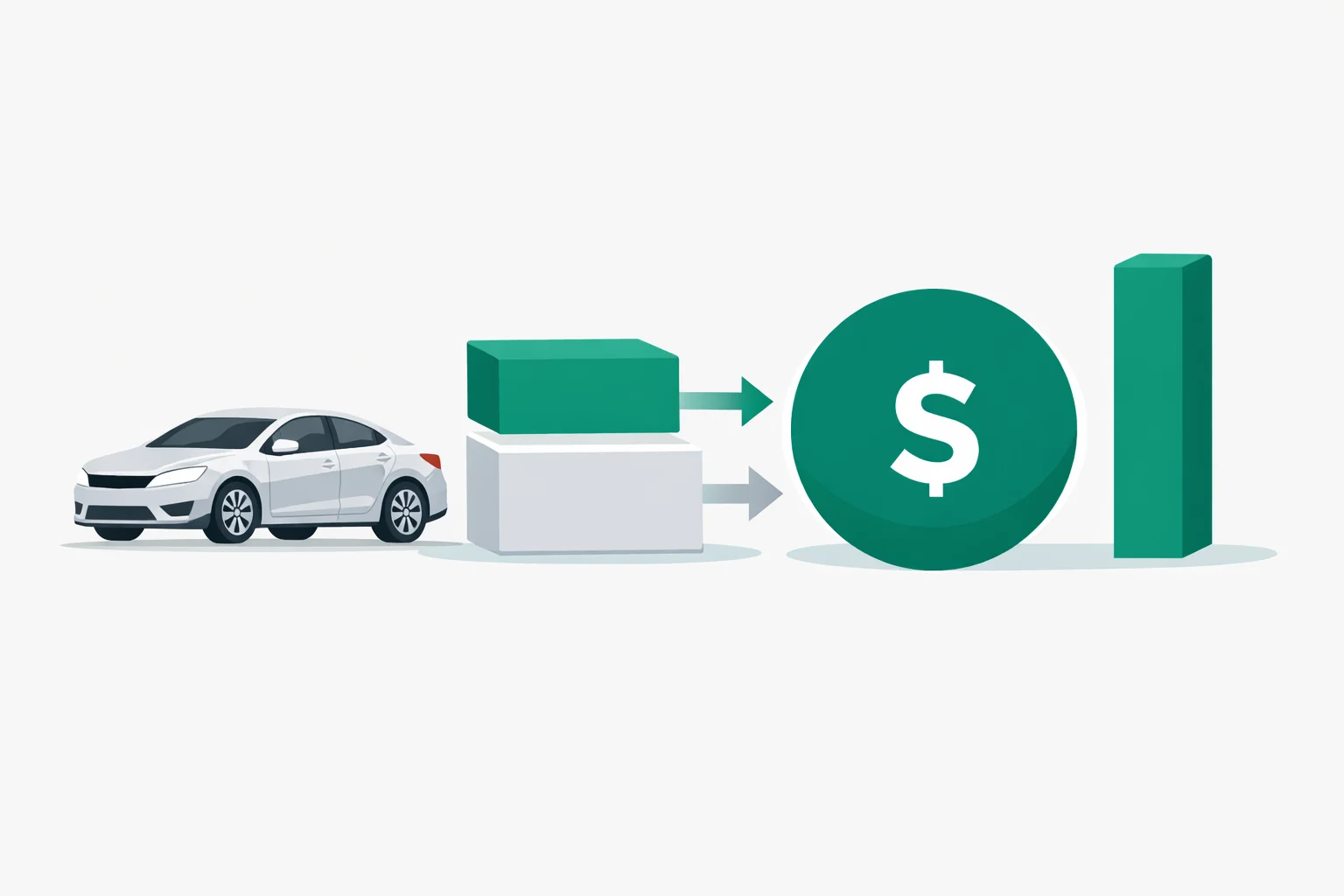
Lower Monthly Cost
Lease payments run 30-40% less than loan payments on the same vehicle
New Car Every 3 Years
Drive the latest model with up-to-date safety features and warranty coverage
Negotiate Everything
Cap cost, money factor, and residual are all negotiation points that cut your payment
A car lease calculator helps you estimate your true monthly payment before you step into the dealership. The average American lease payment hit $540/month in 2025 — but that number swings wildly depending on your negotiation skills. A $2,000 reduction in the capitalized cost on a 36-month lease drops your payment by roughly $56/month, and most dealers have room to move.
This guide breaks down the actual math behind a lease payment, explains the terms dealers hope you won't understand, and shows you exactly where to push back on a deal. Whether you're comparing a $35,000 SUV to a $28,000 sedan, or weighing leasing against buying outright, you'll leave here knowing how to read a lease offer the way a finance manager does.
The Lease Payment Formula — Step by Step
Every car lease payment has two pieces: a depreciation charge (what the car loses in value while you drive it) and a finance charge(interest on the capital). The formula looks intimidating at first glance, but it's straightforward once you see it in action.
Depreciation Charge
(Net Cap Cost − Residual Value) ÷ Lease Term
Finance Charge
(Net Cap Cost + Residual Value) × Money Factor
Monthly Payment
Depreciation + Finance + Sales Tax
Worked Example: Leasing a $38,000 SUV
Let's walk through a real scenario. You're looking at a midsize SUV with a $38,000 MSRP. You negotiate the price down to $36,000, put $2,000 down, and the dealer quotes a money factor of 0.00125 (3.0% APR) with a 55% residual on a 36-month lease.
- Net Cap Cost: $36,000 + $895 fees − $2,000 down = $34,895
- Residual Value: $38,000 × 55% = $20,900
- Depreciation Charge: ($34,895 − $20,900) ÷ 36 = $388.75/mo
- Finance Charge: ($34,895 + $20,900) × 0.00125 = $69.74/mo
- Base Payment: $388.75 + $69.74 = $458.49/mo
- With 6.5% Tax: $458.49 × 1.065 = $488.29/mo
Total cost over 36 months: ($488.29 × 36) + $2,000 down = $19,578. You drove a $38,000 SUV for three years and spent under $20,000 — but you own nothing at the end. That's the core tradeoff. If you'd financed the same vehicle with a standard auto loan, your monthly payment would have been higher, but you'd have equity.
5 Key Factors That Control Your Lease Payment
| Factor | Impact | Can You Negotiate? |
|---|---|---|
| Capitalized Cost (Price) | Every $1,000 off = ~$28 less/month on a 36-mo lease | Yes — always |
| Residual Value % | Higher residual = lower depreciation = lower payment | No — set by manufacturer |
| Money Factor | 0.0005 difference = ~$28/mo on a $36K vehicle | Sometimes — depends on credit |
| Lease Term | 36 mo is the sweet spot; 24 mo costs more/month but less total | Yes — your choice |
| Mileage Allowance | Excess fees run $0.15-$0.30/mile; 3,000 extra miles = $450-$900 | Yes — negotiate upfront |
The residual value is the single biggest lever on your payment — and it's the one you can't negotiate. That's why brand selection matters more than most people realize. A Honda CR-V or Toyota RAV4 with a 60% residual will lease for significantly less than a similarly priced vehicle with a 48% residual, even at the same money factor. Check residual values before you narrow your list.
Leasing vs Buying: A Dollar-by-Dollar Comparison
The lease-or-buy question doesn't have a universal answer. It depends on how long you keep cars, how many miles you drive, and whether you'd rather have lower monthly payments or long-term equity. Here's a direct comparison using a $36,000 vehicle:
| Metric | Lease (36 mo) | Buy (60 mo loan) |
|---|---|---|
| Monthly Payment | ~$488 | ~$627 |
| Down Payment | $2,000 | $5,000 |
| Total Paid (3 years) | $19,578 | $27,572 |
| Vehicle Value After 3 Years | $0 (returned) | ~$22,050 |
| Net Cost (3 years) | $19,578 | $5,522 |
| Cost Per Month (6 years) | $544 (2 leases) | $338 (keep after payoff) |
The pattern is clear: leasing costs less out of pocket each month, but buying costs less over time — especially if you keep the car for 6+ years after paying it off. Use our car payment calculator to model the buying side and see exactly where the crossover happens for your budget.
Common Lease Mistakes That Cost Hundreds (or Thousands)
Putting too much money down
If the car is totaled or stolen in month 3, you lose that $3,000-$5,000 down payment. Gap insurance covers the lease balance, not your cash. Keep the down payment under $2,000 and accept the slightly higher monthly.
Not negotiating the cap cost
Dealers want you to focus on the monthly payment. Don't. Negotiate the price exactly as if you were buying. A $2,000 price cut saves $56/month on a 36-month lease — that's $2,016 over the term.
Underestimating annual mileage
Excess mileage charges average $0.20-$0.30 per mile. Driving 15,000 miles/year on a 12,000-mile lease means 9,000 excess miles over 3 years = $1,800-$2,700 penalty at turn-in. Buy extra miles upfront for $0.10-$0.15 each — half the penalty rate.
Leasing longer than 36 months
A 48 or 60-month lease extends past the bumper-to-bumper warranty on most vehicles. You're now paying lease payments AND repair costs on a car you don't own. Stick to 36 months or less.
Money Factor Decoded: The Hidden Interest Rate
Dealers quote the "money factor" instead of an APR for a reason — 0.00125 sounds tiny, but it's actually 3.0% annual interest. The conversion is simple: multiply the money factor by 2,400 to get the equivalent APR. Here's a reference table for common money factors:
| Money Factor | Equivalent APR | Monthly Finance Charge ($36K vehicle) |
|---|---|---|
| 0.00050 | 1.2% | $27.95 |
| 0.00075 | 1.8% | $41.92 |
| 0.00100 | 2.4% | $55.90 |
| 0.00125 | 3.0% | $69.87 |
| 0.00150 | 3.6% | $83.85 |
| 0.00200 | 4.8% | $111.80 |
| 0.00300 | 7.2% | $167.70 |
If the dealer won't disclose the money factor, calculate it yourself: divide the advertised APR by 2,400. Credit scores above 720 typically qualify for the manufacturer's "base" money factor. Below 680, expect a markup of 0.0005-0.0015, which adds $28-$84/month to your payment. You can check your auto loan APR to understand what rate your credit profile typically commands.
Negotiation Playbook: 5 Moves to Cut Your Lease Payment
Get competing quotes from 3+ dealers. Email the internet sales department at each dealer with your target vehicle, trim, and color. The average spread between dealers in a metro area is $1,500-$3,000 on the same vehicle.
Time your lease to match manufacturer incentives. End-of-quarter (March, June, September, December) and model-year-end (August-October) offer the strongest rebates and subsidized money factors. A $1,500 lease cash incentive cuts $42/month off a 36-month lease.
Target vehicles with high residual values. A 60% residual vs 48% residual on a $38,000 MSRP means $4,560 less in depreciation charges — saving $127/month over 36 months.
Ask for the money factor in writing. If they won't share it, they may be marking it up. The base (or "buy rate") money factor is set by the manufacturer's finance arm. Dealers can mark it up for additional profit.
Negotiate the disposition fee. The $350-$500 fee charged at lease-end is often waived if you're leasing another vehicle from the same brand. Always ask.
When Leasing Makes the Most Sense
You drive under 15,000 miles per year
Standard lease allowances cover 10,000-15,000 miles/year. High-mileage drivers rack up penalties that erase the monthly savings.
You prefer driving a new car every 2-3 years
Leasing lets you upgrade to the latest safety tech and fuel efficiency without the hassle of selling a used car.
You use the vehicle for business
Business leases offer tax advantages: lease payments are often deductible as a business expense, and you avoid depreciating an asset on your books.
You want lower cash outlay upfront
Lease down payments average $2,000-$3,000 vs $5,000-$7,000 for a purchase. That freed-up cash can go into investments earning 6-8% annually.
What Happens at Lease-End
When your lease term expires, you typically have three options — and the right choice depends on the vehicle's market value versus its residual value.
Return the vehicle.Walk away and lease something new. You'll pay a disposition fee ($300-$500) and any excess mileage or wear-and-tear charges. Budget $500-$1,500 for turn-in costs on a typical lease.
Buy it at the residual price. If the car's market value exceeds the residual, this is a smart move. A vehicle with a $20,900 residual that's worth $24,000 on the market gives you $3,100 in instant equity. Finance the buyout with our auto loan calculator to see the numbers.
Lease a new vehicle. Loyalty bonuses from the same manufacturer often waive the disposition fee and may include additional lease cash ($500-$1,000) on the next vehicle. Ask about loyalty programs before signing a new lease.
Electric Vehicle Leases: A Special Case
EV leases have a unique advantage in 2025-2026: the federal $7,500 EV tax credit can be applied directly to the lease through the dealer (as a "commercial clean vehicle credit"), reducing the capitalized cost even on vehicles that don't qualify for the consumer credit. This alone can cut a 36-month lease payment by $208/month. Combined with manufacturer incentives, some EV leases offer payments comparable to much cheaper gas-powered models. However, EV residual values are more volatile, so run the numbers carefully with our calculator before committing.